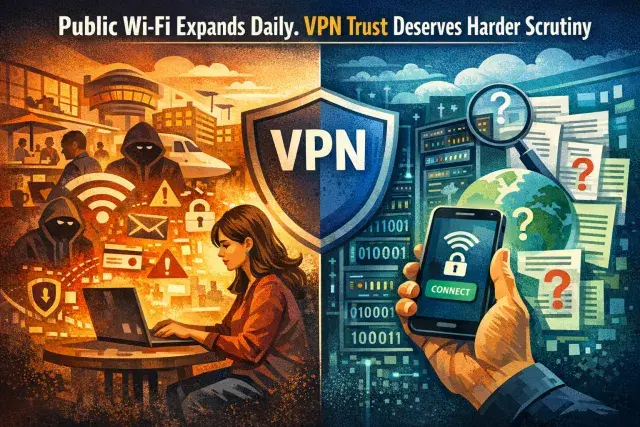
Apple has done more than most consumer technology companies to turn privacy into a selling point, but iPhone and iPad users still do not get full network protection by default. iCloud Private Relay can mask an IP address in Safari, yet it does not cover all internet traffic, which leaves apps, other browsers and many routine connections outside that shield.
That gap explains why VPNs remain relevant on iOS. A well-run VPN encrypts data leaving the device, which matters most on public Wi-Fi, while travelling, and when users want more control over how their traffic appears to websites, platforms and local networks.
What Apple protects, and what it does not
Private Relay is often misunderstood as a full VPN replacement. It is not. Apple designed it to reduce tracking in Safari by splitting browsing requests between two internet relays so that no single party sees both the user’s identity and the destination site. That is useful, but narrow. It does not extend system-wide protection to every app, and it is not intended as a broad tool for region switching or securing all traffic on an untrusted network.
For many people, that distinction matters only occasionally. For anyone who uses airport Wi-Fi, hotel networks, workplace guest access or third-party browsers, it matters far more often. A VPN routes a device’s traffic through an encrypted tunnel before it reaches the wider internet, which can reduce exposure to local snooping and make routine browsing harder to profile.
Which VPNs stand out on iPhone and iPad
Based on the options reviewed here, NordVPN remains the strongest all-round choice for most iPhone and iPad owners. Its appeal is straightforward: fast speeds, a polished iOS app, strong privacy claims and reliable access to location-restricted services. Its weaknesses are less technical than commercial, with pricing that tends to push users toward long commitments and higher renewal costs.
Surfshark makes the most sense for households with many devices. Unlimited connections are still unusual among major VPN services, and that changes the value calculation for families using a mix of iPhones, iPads, laptops and streaming hardware. ExpressVPN, meanwhile, keeps its place largely because it is easy to understand and easy to use. For readers who want minimal setup and fewer decisions, that simplicity has real value.
ProtonVPN deserves attention from privacy-focused users, especially those who want a service built around a security-first identity rather than a bundle of extras. CyberGhost is more attractive for streaming-focused buyers, while PIA appeals to people who want more manual control. Free options exist, but they usually come with stricter limits, fewer locations or tighter performance caps than paid tiers.
What matters more than marketing claims
On iOS, a good VPN should do three things well: stay connected reliably, keep speeds high enough for everyday use, and make its privacy policy understandable. “No-logs” claims are common across the industry, but they are not all equal. Audits, transparent ownership, clear jurisdiction and a record of public scrutiny matter more than slogans on a pricing page.
Users should also separate core VPN performance from add-on features. Malware blocking, breach alerts and identity monitoring may be useful, but they are secondary. The fundamentals are simpler: strong encryption, a kill switch where available, broad server coverage, and a provider with a credible history of handling customer data carefully.
How to choose the right one for your needs
The best VPN for an iPhone is not always the one with the longest feature list. For most readers, the practical questions are clearer: Do you want better protection on public Wi-Fi? Do you need access to services while abroad? Do you want one subscription for many devices? Or do you care most about the company’s privacy posture?
Choose NordVPN for the strongest overall balance of speed, privacy and usability.
Choose Surfshark if unlimited device connections matter most.
Choose ExpressVPN if ease of use is the priority.
Choose ProtonVPN if privacy is your main concern.
Apple’s privacy tools are useful, and for many users they are a meaningful first layer. They are not the whole system. For broader protection across an iPhone or iPad, a VPN still fills an important role that Apple’s own safeguards do not fully cover.