The US Open's mixed doubles competition begins today, bringing an unusual pairing to Flushing Meadows: Serena Williams stepping onto the court alongside Carlos Alcaraz. The event also features top-seeded duo Aryna Sabalenka and Novak Djokovic, while qualifying rounds for the men's and women's singles draws continue through the week. First held in 1881, the US Open ranks as the second-oldest Grand Slam event after Wimbledon, and like the Australian Open, it's contested on hard courts at the USTA Billie Jean King National Tennis Center in Queens.
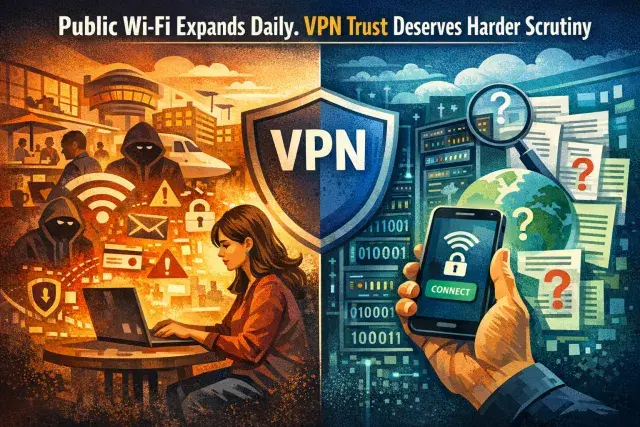
For international viewers hoping to follow the action, geography can complicate things. ESPN holds exclusive US broadcast rights, and streaming access is generally tied to a viewer's location through IP-based restrictions. Anyone traveling abroad, or based outside the United States, may find themselves locked out of the coverage entirely. This is where a virtual private network becomes useful: by routing your connection through a server in a different country, a VPN can make it appear as though you're browsing from that location, allowing access to region-specific streaming platforms. For readers curious about more advanced configurations, including how routing traffic through multiple servers can add extra layers of privacy, this double vpn explained resource breaks down how the technique works and when it's actually worth using.
How Streaming Access Actually Works
Live TV subscriptions remain the most straightforward route to ESPN's coverage. Services like DirecTV, Fubo, Sling, and YouTube TV each bundle ESPN into various sports packages, with monthly costs ranging from roughly $20 to $65 depending on the provider and tier. ESPN also offers its own standalone streaming service, ESPN Unlimited, aimed at cord-cutters who don't want a full cable-replacement package. The common thread across all these options is that they verify a subscriber's location before granting access, which is standard practice for licensed sports broadcasting.
A VPN doesn't bypass subscription requirements, but it does address the geographic layer. Encryption protects the connection itself, while server selection determines which country's content library or broadcast rights apply to your session. This distinction matters: a VPN changes where you appear to be, not what you're authorized to watch. Viewers still need a valid account with a service that carries the coverage, whether that's a cable-replacement platform or a regional broadcaster in another market.
The Broader Privacy Trade-off
Beyond sports streaming, VPN adoption has grown substantially as awareness of data collection and surveillance has spread. The core technology, encrypted tunneling between a device and a remote server, was originally built for corporate networks needing secure remote access. Consumer-facing VPNs have since repurposed that infrastructure for privacy and content access alike. The trade-off is real: connection speeds can dip slightly due to encryption overhead and server distance, and the provider you choose becomes a trusted intermediary for your traffic, which makes logging policies and jurisdiction genuinely important factors rather than fine print to skip.
What's at Stake This Week
On the court, this year's mixed doubles field includes several notable pairings beyond Williams and Alcaraz: Iga Swiatek with Casper Ruud, Jessica Pegula with Jack Draper, and Taylor Townsend with Alexander Zverev. Venus Williams joins Alexander Bublik. The singles competitions, meanwhile, feature 17 former Grand Slam singles winners, including top-ranked Jannik Sinner, Alexander Zverev, and Alcaraz on the men's side, and Sabalenka, Elena Rybakina, and Jessica Pegula among the women. The United States leads all nations with 28 competitors in the main draw, a reminder that even as global interest in the event grows, access to watch it remains unevenly distributed by geography and subscription cost alike.