
When Belgium and Egypt face off at Seattle's iconic venue in the opening fixture of the 2026 FIFA World Cup, viewers in two very different parts of the world will be watching through entirely different broadcast arrangements - one built on a decades-old public service model, the other on a commercially exclusive regional deal. For fans in Belgium, the good news is straightforward: the coverage is free-to-air, delivered through the country's publicly funded networks. For viewers in Egypt, access runs exclusively through beIN SPORTS, the Doha-headquartered pay broadcaster that holds the rights across the Middle East and North Africa region.
Belgium's Linguistic Divide Shapes Its Broadcasting Architecture
Belgium is one of the few countries in the world where public broadcasting is formally structured along linguistic lines. The country has three official language communities - Dutch, French, and German - and its media landscape reflects this constitutional reality. VRT serves Flanders, the Dutch-speaking north, and is funded primarily through a government allocation from the Flemish Community. RTBF serves the French-speaking population concentrated in Wallonia and Brussels, operating under a public service contract with the French Community.
This split is not merely administrative. It reflects a broader federal arrangement in which cultural and media policy is devolved to the communities rather than managed centrally. The result is that two distinct public broadcasters can hold rights to the same event, each serving their own audience without overlap. Dutch-speaking viewers access coverage through VRT's linear channels or the VRT MAX streaming platform. French-speaking viewers use RTBF's networks or the RTBF Auvio app. Both services are free, requiring no subscription.
Free-to-air access to major international events carries real public value. Research across European broadcasting contexts has consistently shown that open-access coverage drives higher collective viewership and broader cultural participation than pay-walled alternatives. Belgium's approach - structurally guaranteed by the way rights are allocated to public bodies - means that access is not contingent on household income.
beIN SPORTS and the MENA Pay-TV Model
Egypt's situation is structurally different. beIN SPORTS holds the broadcast rights across the MENA region, a territory covering more than twenty countries. The network, launched in 2012 and headquartered in Doha, Qatar, built its regional dominance by acquiring exclusive rights to major global properties. It distributes content through dedicated channel tiers as well as its beIN CONNECT digital platform and the TOD streaming service, which operates as a standalone subscription product in several MENA markets.
The pay-TV model that beIN represents is the norm across much of the MENA region for premium international events. Unlike the European public broadcasting tradition, where universality of access is often written into regulatory frameworks, the MENA rights environment has generally developed around commercial exclusivity. For Egyptian viewers, this means that accessing the broadcast legally requires either a beIN subscription or access through TOD, both of which carry costs.
Streaming Access and the Boundaries of Legitimate Viewing
Both VRT MAX and RTBF Auvio apply geographic restrictions, limiting access to users located within Belgium. This is a standard condition of broadcast licensing: rights are sold on a territorial basis, and broadcasters are contractually obligated to enforce those boundaries. Viewers outside Belgium who attempt to access these platforms may find content blocked.
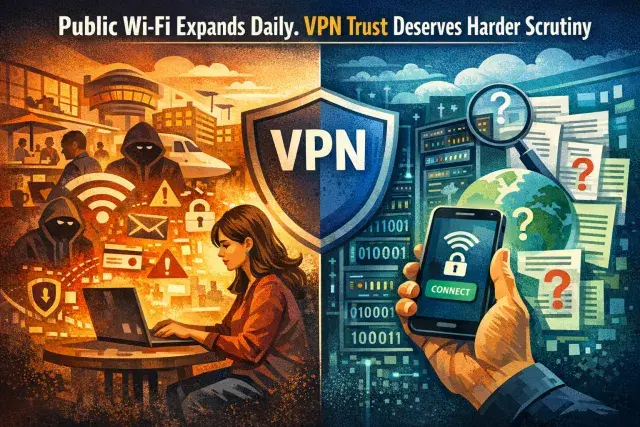
The temptation to circumvent these restrictions through virtual private network services is understandable, but carries meaningful caveats worth understanding clearly.
- Free VPN services typically lack the connection reliability and server infrastructure required for uninterrupted live video. Buffering, latency, and dropped connections are common during high-demand broadcasts.
- Using a VPN to bypass geographic restrictions on a streaming platform likely violates that platform's Terms of Service, which can result in account suspension.
- Browsing in private or incognito mode when accessing any streaming site prevents the platform from reading stored cookies, which can otherwise affect content availability, language settings, or account detection.
For viewers who are legitimately within the relevant territory, the cleanest path is always the direct one: the official platform, accessed through a standard browser or dedicated app, without interference. VRT MAX and Auvio are well-maintained services that handle live broadcasts reliably for domestic users. beIN CONNECT and TOD function similarly for verified subscribers in the MENA region.
Why Broadcast Rights Arrangements Matter Beyond Individual Access
The contrast between Belgium's free-to-air model and beIN's exclusive regional arrangement illustrates a wider tension in global media rights that has deepened as streaming has grown. In Europe, regulators in several countries have introduced "listed events" legislation - laws that require certain culturally significant events to remain available on free-to-air platforms, preventing pay broadcasters from acquiring exclusive rights. Belgium's linguistic community structure effectively achieves a version of this outcome through institutional design rather than direct regulation.
In markets where no such protections exist, the progressive migration of major events behind paywalls has measurable effects on public engagement, particularly among lower-income households. The question of who can afford to watch - and who cannot - is increasingly a policy question, not merely a commercial one. Belgium's bifurcated but publicly accessible model is, in that context, worth examining as a functioning example of how access can be preserved even within a complex, multilingual federal system.